Product/ UX Designer
Murmur
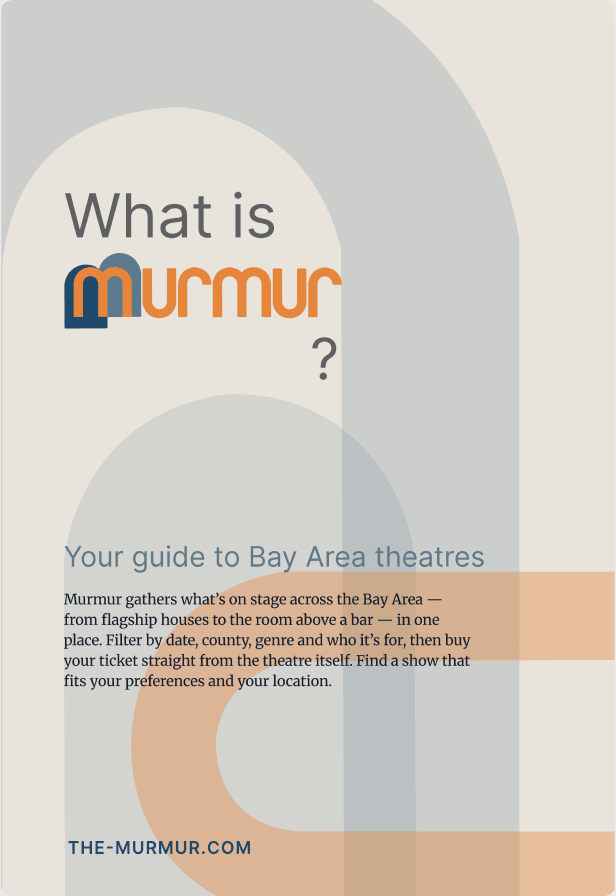
Murmur is a search engine for Bay Area theatre. I designed it end to end with its founder, Vera Belova, and built the front end that runs it. It’s live at the-murmur.com.
Long story short
Murmur started with a conversation. When I met Vera Belova, I complained that after moving to the Bay Area, I still couldn’t figure out where to look for good theatre. Vera knows the local theatre scene deeply and had long wanted to create a place where people could discover it more easily. She had already spent months collecting theatres and shows in Airtable. I saw the beginnings of a product and offered to help turn the idea into one.
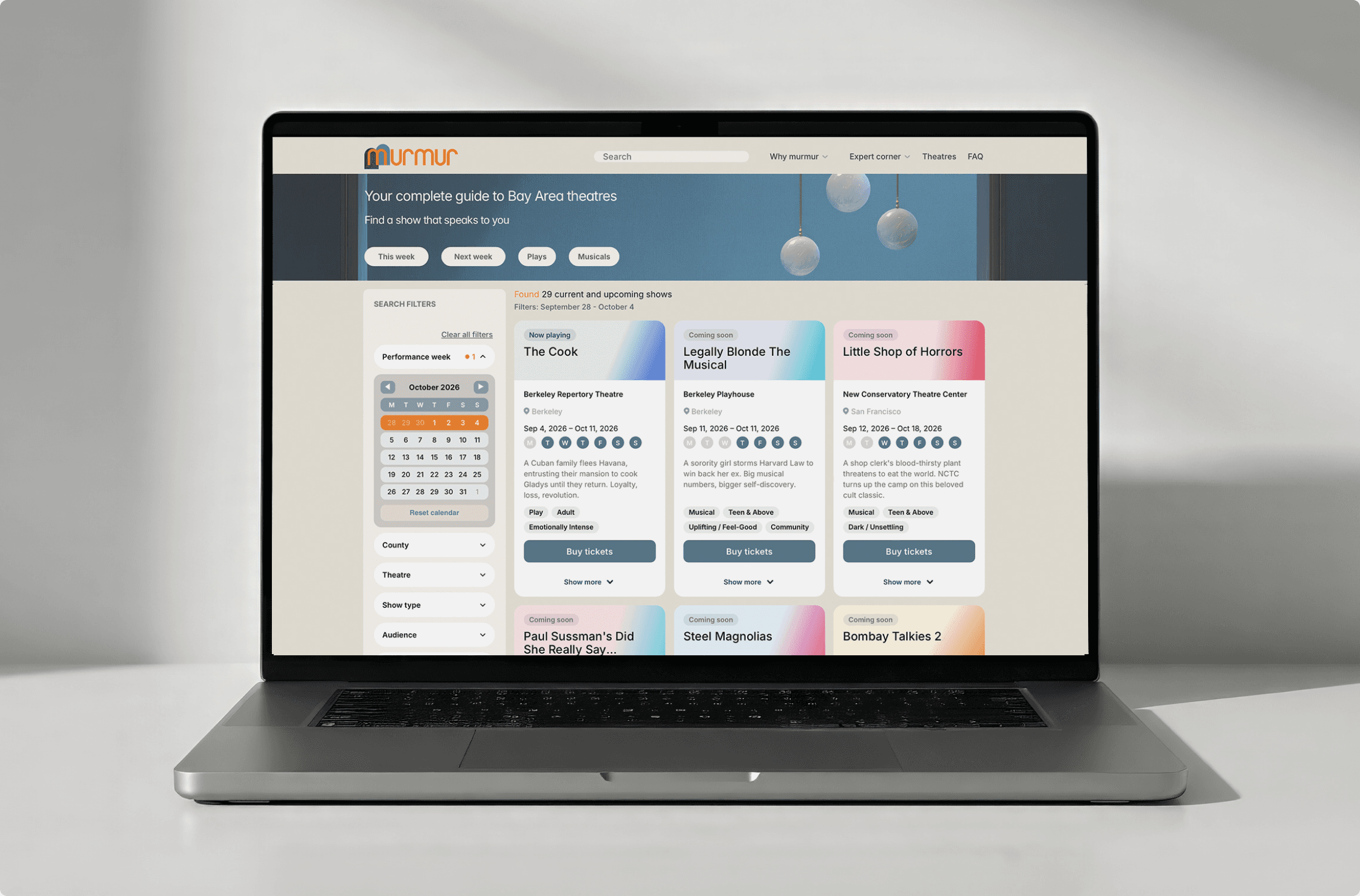
Vera brings the theatre knowledge and content, I bring the product thinking and design. Research confirmed that theatre discovery in the Bay Area is fragmented and that people use very different criteria when choosing what to see. I grouped the most common needs into a filter panel, while Vera added curatorial criteria such as production level and mood. People responded to these especially well as intuitive guides for choosing a show.
Services
Tools
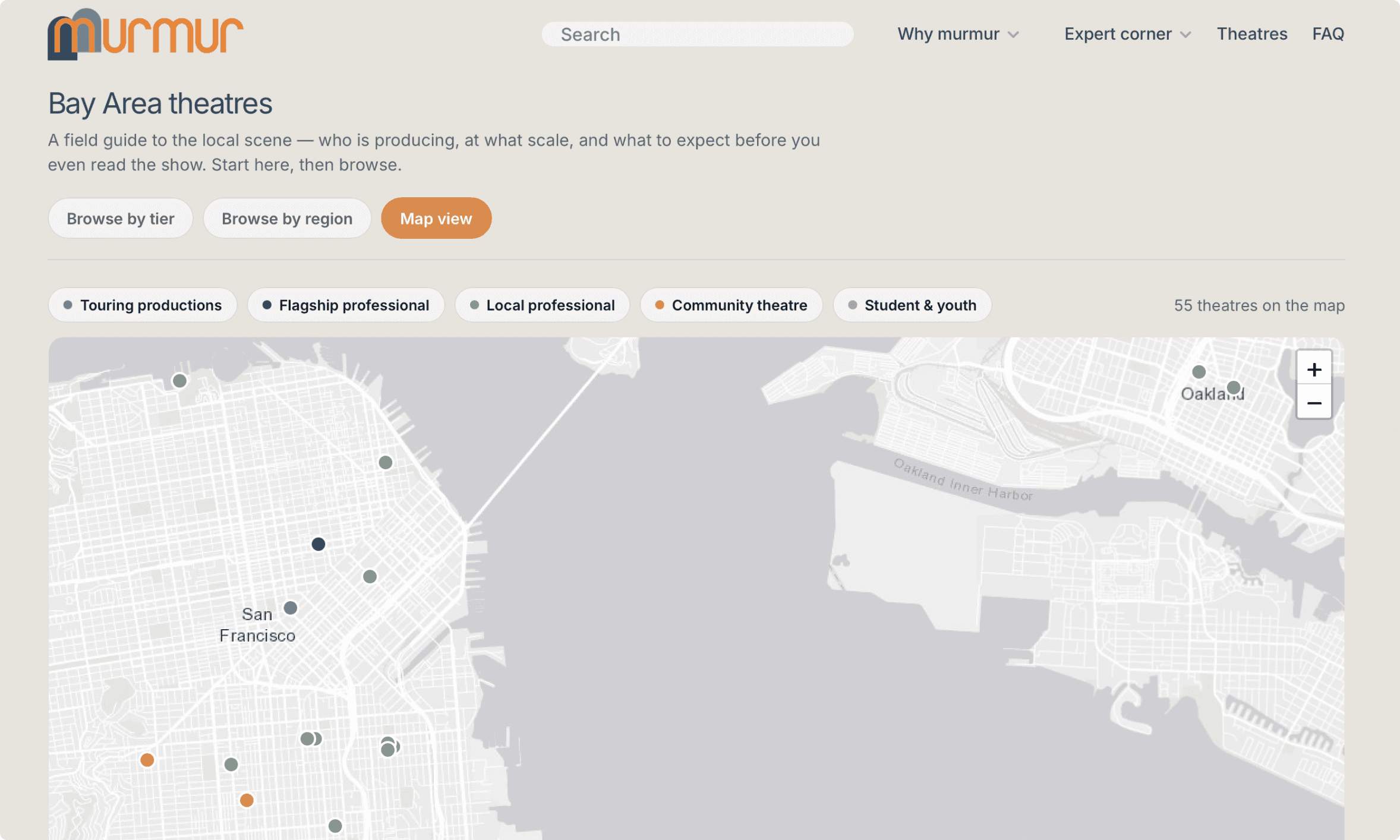
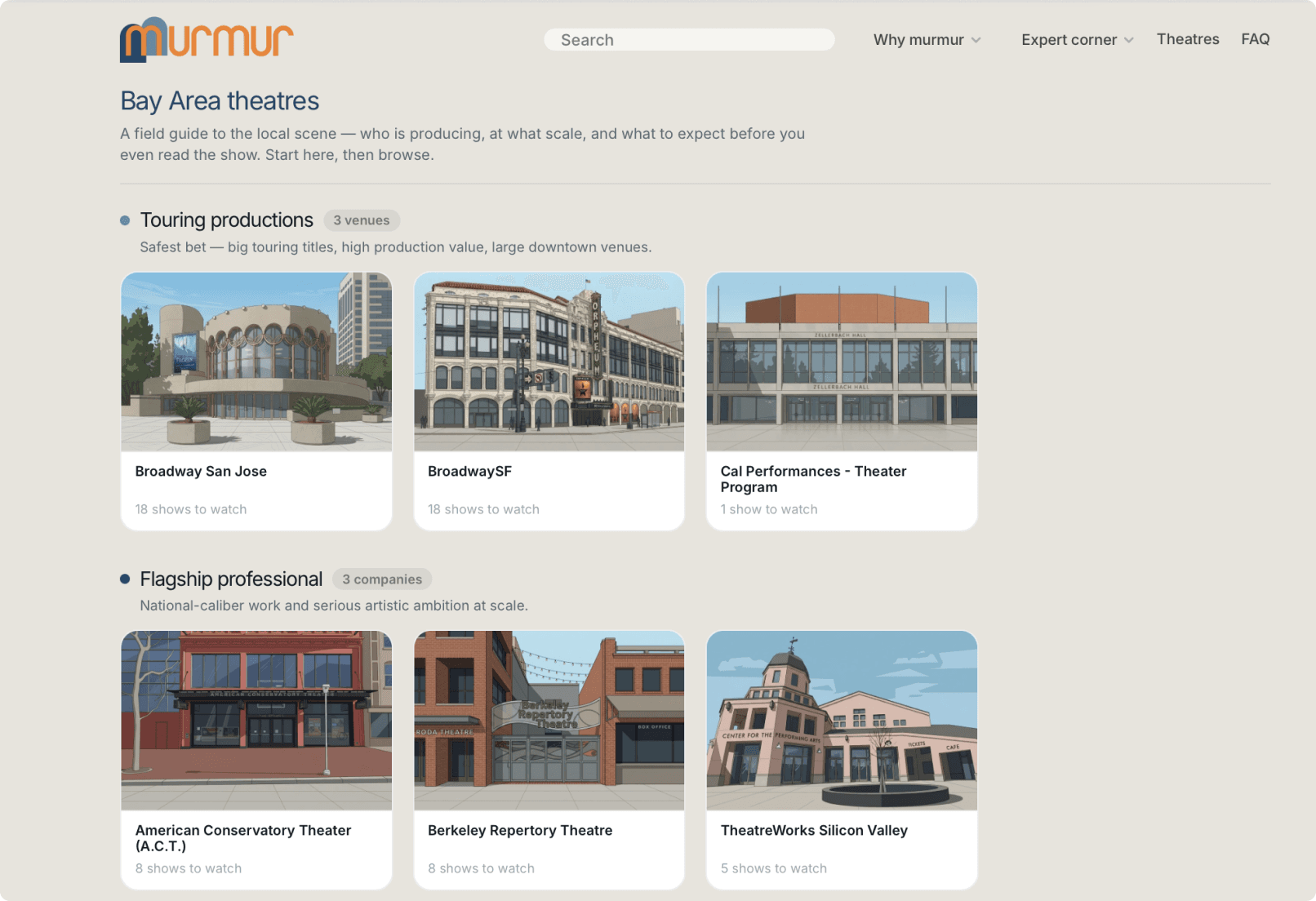
Murmur now brings together around 65 Bay Area theatres in one place. To make discovery faster, I added quick searches for This Week, Next Week, Plays and Musicals, plus a “Closing Soon” tag for productions nearing the end of their run. The map shows where each theatre is located, and usability testing confirmed that people found it especially useful for estimating travel time before choosing a show.
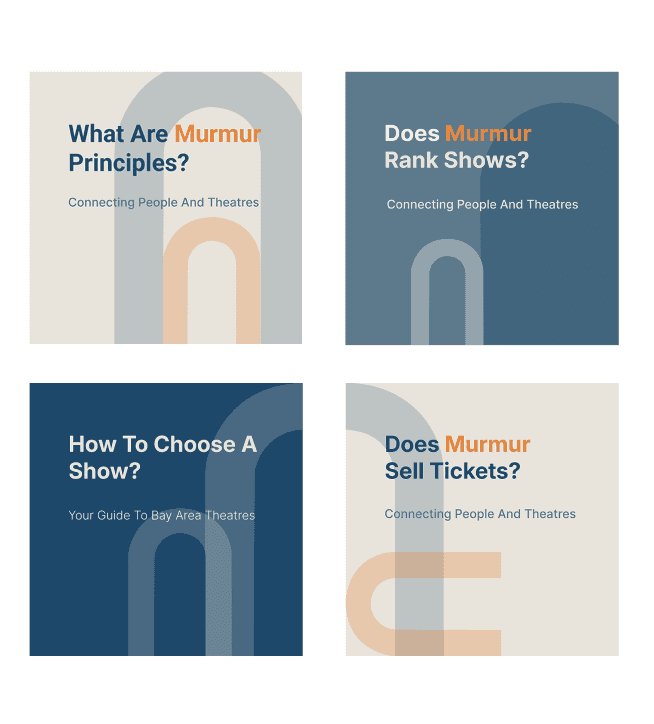
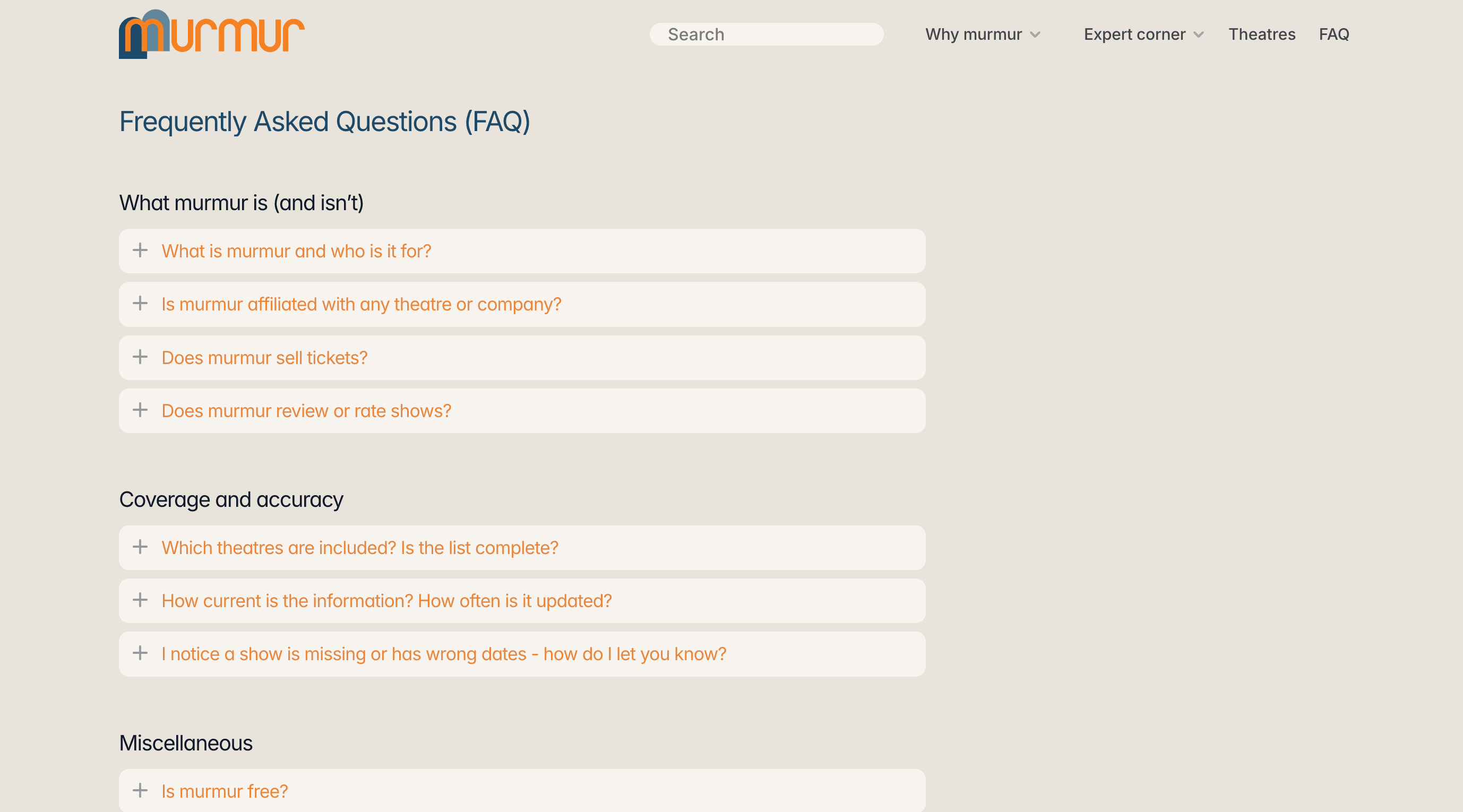
Murmur deliberately does not sell tickets. This reflects Vera’s principle that every theatre should have an equal chance to reach an audience, rather than being ranked by popularity or sales. There are no star ratings or popularity scores. Instead, the filter system is designed to help each person find a production that fits their own criteria, and then sends them directly to the theatre’s website to book.
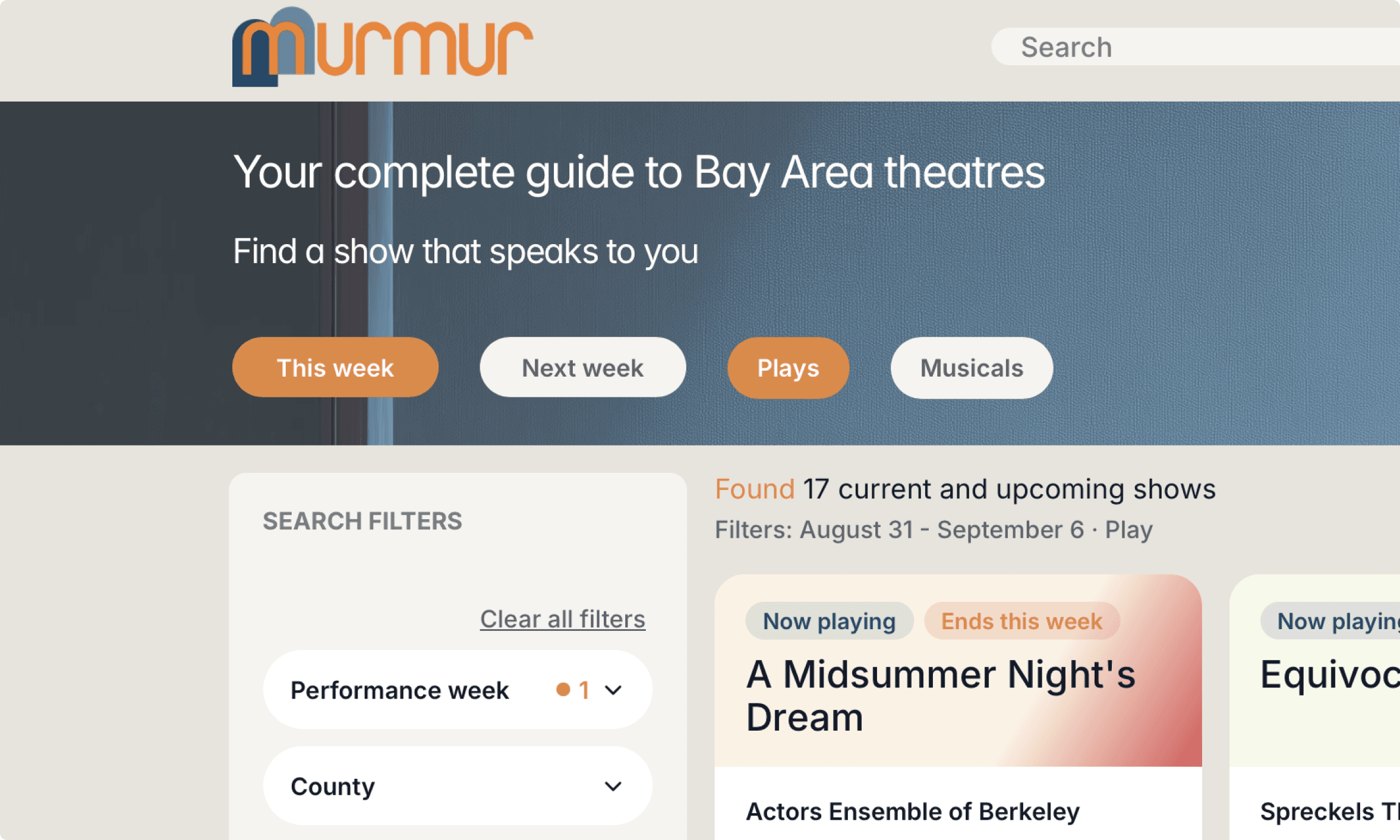
The front end is the part that surprised me. Data moves Airtable → GitHub → Vercel → JSON → Framer, with custom code components filtering in the browser: 250+ shows, seven filters applying as you set them, no backend to maintain. Vera prunes and reloads the catalogue herself, so the exact count is never the same twice and the pipeline has to survive that. Bay Area theatres mostly don’t publish usable poster art, so every company got its own two-colour gradient, and the listing reads as a set of distinct places.
Vera's catalogue, hand-edited
sync and version history
/api/shows endpoint
one payload, all shows
code components filter in the browser
No backend to maintain — the catalogue changes whenever Vera (the founder) edits it.
No backend to maintain — the catalogue changes whenever Vera (the founder) edits it.
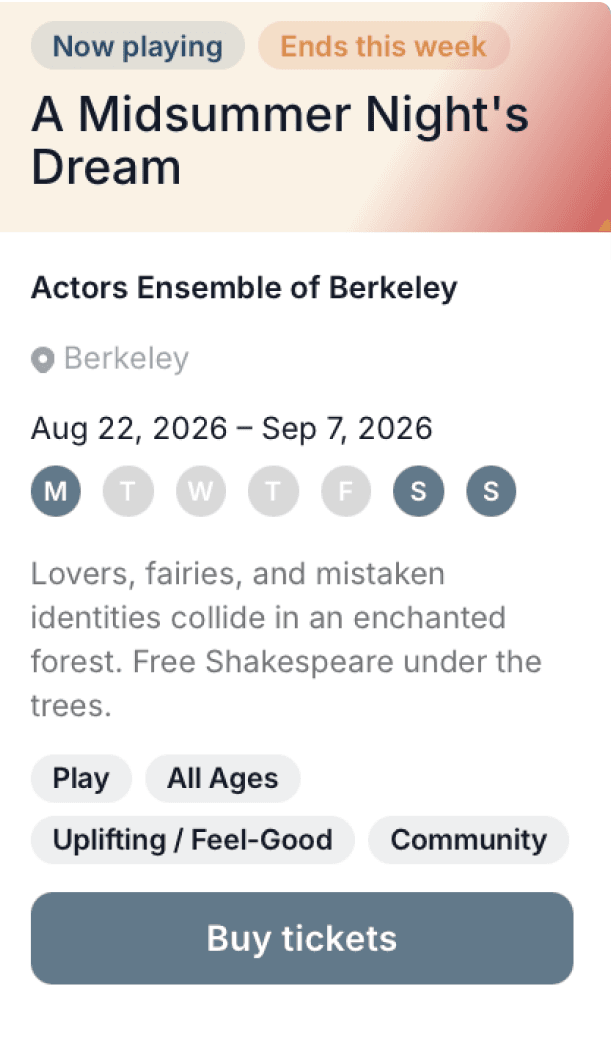
We chose not to use posters or production photography. Instead, I developed a system of 65 gradients, with each theatre assigned its own visual identity. The gradients give every production a distinct presence in the grid while keeping the overall experience consistent and easy to scan.
PRODUCT


BRAND AND PRINT